More Than a Babysitter: How After-School Care Shapes Who Your Child Becomes
Most parents think of out-of-school care as a practical necessity — a safe place for kids while adults are at work. But the research tells a much more compelling story about what's actually happening during those afternoon hours and why the quality of that environment matters enormously for your child's long-term growth.
We hear a lot about academic readiness, literacy benchmarks, and math scores. What gets far less attention is something researchers call social-emotional learning, or SEL — and it turns out the hours between 3 p.m. and dinnertime might be some of the most developmentally significant of your child's entire day.
What Social-Emotional Learning Actually Means (And Why School Alone Isn't Enough)
Social-emotional learning covers a wide range of skills: recognizing and managing emotions, building empathy, navigating friendships, resolving disagreements, and bouncing back from frustration. These aren't soft extras. According to the Collaborative for Academic, Social, and Emotional Learning (CASEL), kids with strong SEL skills perform better academically, have fewer behavioral problems, and show better mental health outcomes well into adulthood.
Here's the catch: the traditional school day isn't really designed to build these skills in a deep, consistent way. Classrooms are structured around instruction. Teachers are focused on curriculum delivery. There's limited time for the kind of unscripted, peer-driven interaction where social-emotional competencies actually develop.
That's where quality out-of-school care programs come in — not as a substitute for school, but as a genuinely distinct developmental environment.
The After-School Window Is Uniquely Powerful
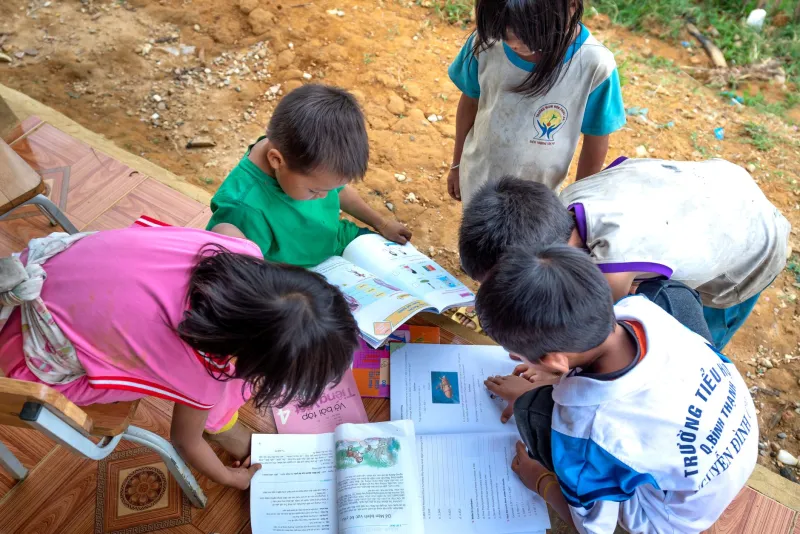
Think about what a well-run OSC program actually looks like. Kids from different grade levels mix together. They choose activities, negotiate roles, work through disagreements without a teacher scripting every interaction. They experience small failures — a game that doesn't go their way, a friend who's in a bad mood — and they have to figure out what to do next.
This kind of low-stakes but real social complexity is exactly what builds resilience. Psychologists call it "productive struggle" in the emotional domain. It's different from the structured problem-solving of a math class. It's messier, more personal, and ultimately more formative.
Research published by the Harvard Graduate School of Education found that children in high-quality after-school programs showed measurable gains in social skills, self-confidence, and their ability to relate positively to peers — gains that persisted over time. The key word there is quality. Not every after-school environment produces these outcomes equally.
Conflict Resolution: The Skill Kids Can't Learn From a Worksheet
One of the most underappreciated benefits of structured OSC programming is what happens when kids disagree — and how the adults in that environment respond.
In a thoughtfully designed program, conflict isn't just managed; it's used as a teaching moment. When two kids argue over a game or feel left out at snack time, trained caregivers guide them through a process of naming what they're feeling, hearing the other person's perspective, and working toward a resolution. Over weeks and months, kids internalize this process. It becomes part of how they approach conflict naturally.
This is qualitatively different from simply being told to "be nice" or being separated when things get heated. It's active emotional coaching, and it happens dozens of times across a school year in ways that classroom teachers rarely have the bandwidth to replicate.
Peer Relationships: The Building Blocks of Emotional Intelligence
Friendships formed in out-of-school care settings are different from classroom friendships. Kids aren't seated by a teacher's chart or grouped by reading level. They self-select based on genuine interest, shared humor, or simply who showed up to the same activity that afternoon.
These organic connections matter. Learning to initiate a friendship, sustain it through small conflicts, and repair it after a falling-out are all critical social competencies. And because OSC programs often maintain consistent groupings across an entire school year — or even multiple years — kids get the chance to develop real, lasting peer bonds rather than surface-level familiarity.
For kids who struggle socially, this consistency can be transformative. A child who has a hard time breaking into established classroom social groups often finds it easier to connect in the less hierarchical, more flexible social environment of after-school care.
Emotional Resilience: Built in the Quiet Moments
Resilience doesn't develop through grand challenges. It builds in small, repeated moments — the art project that didn't turn out right, the team that lost the relay race, the friend who chose to play with someone else today.
Quality OSC programs are intentionally designed to include experiences where kids encounter minor setbacks in a safe, supported environment. The goal isn't to protect children from disappointment; it's to make sure they have a caring adult nearby when disappointment happens, someone who can help them process it and try again.
Over time, kids who regularly experience this kind of supported challenge develop what researchers call "emotional regulation" — the ability to feel big feelings without being overwhelmed by them. This skill, more than almost any other, predicts success in school, relationships, and eventually, the workplace.
What to Look for in a Quality Program
Not all out-of-school care is created equal. When you're evaluating an OSC program for your child, here are a few things worth paying attention to:
- Staff training and stability. Consistent, trained caregivers form the relational foundation that makes SEL possible. High staff turnover is a red flag.
- Intentional programming. Look for structured activities that mix free choice with guided experiences — not just screen time or unstructured waiting.
- How conflict is handled. Ask the program director directly: what do staff do when kids argue? The answer tells you a lot.
- Mixed-age interaction. Programs that intentionally mix age groups create natural mentorship opportunities and broader social exposure.
- Communication with families. Programs that keep parents informed about their child's social experiences — not just behavioral incidents — are invested in the whole child.
The Bottom Line
Your child spends a significant portion of their waking hours in out-of-school care. That time is never neutral — it's either building something or missing an opportunity to. The social-emotional skills your child develops during those afternoon hours will shape how they navigate friendships, handle stress, and relate to the world for years to come.
Choosing quality out-of-school care isn't just a logistical decision. It's one of the most meaningful investments you can make in who your child is becoming.