Let Them Stumble: How Good Care Programs Build the Kind of Confidence No Classroom Grade Can Give
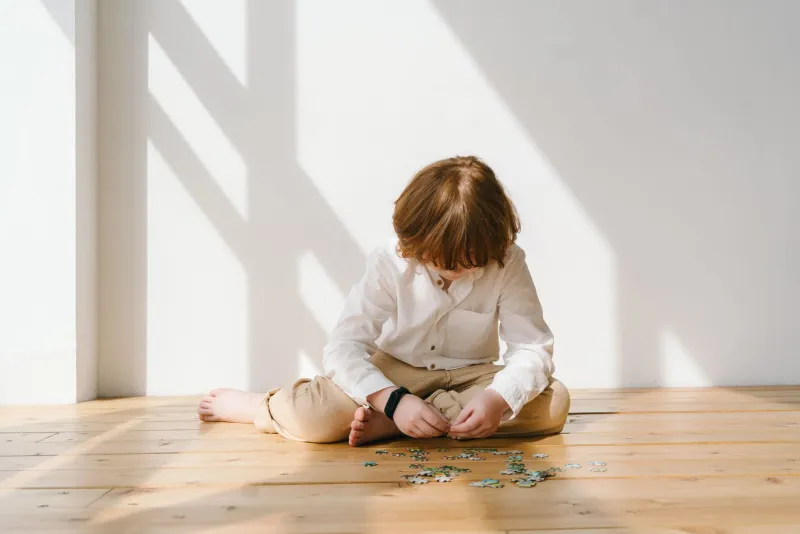
There's a moment every parent has witnessed. Your kid tries something—building a tower, figuring out a puzzle, kicking a ball into a net—and it doesn't work. What happens in the next thirty seconds? That's not a small moment. According to researchers who study early childhood development, that tiny window of time, repeated hundreds of times across the first eight years of life, is quietly determining how your child will handle challenge, failure, and uncertainty for decades to come.
We call it the "confidence gap," and it's not about grades or test scores. It's about whether a child has had enough low-stakes practice with struggle to believe, deep in their bones, that they can figure things out even when the answer isn't obvious.
Quality childcare and after-school programs are where a lot of that practice actually happens. And most parents have no idea.
What the Brain Is Actually Doing When Kids Fail Safely
Neuroscience has given us a much clearer picture of what happens inside a young child's brain during moments of manageable frustration. When a child faces a challenge that's just slightly beyond their current ability—what researchers call the "zone of proximal development"—the brain releases small amounts of stress hormones that actually sharpen focus and motivation. That's productive. That's learning.
But here's the catch: the child has to feel safe for any of this to work. If the stakes feel too high—if a wrong answer means embarrassment, if a mistake brings sharp correction, if failure feels permanent—the brain's threat response kicks in instead. Learning shuts down. Confidence erodes.
This is why structured care environments outside the home can be so powerful. A good daycare or after-school program creates conditions where kids can bump up against their limits without any of the emotional weight that sometimes comes with failing in front of parents or being evaluated by teachers. The setting is familiar. The adults are warm but not emotionally invested the way a parent is. Other kids are right there doing the same messy, imperfect work. It's a genuinely different kind of safe.
Why "Productive Failure" Sounds Scary But Isn't
The phrase "productive failure" was coined by educational researcher Manu Kapur, and it describes something that feels counterintuitive: kids often learn more deeply when they're allowed to struggle with a problem before they're taught the solution. Not struggle alone in confusion—but struggle with support nearby, with encouragement to keep trying, with the understanding that the attempt itself has value.
In a well-run childcare setting, this happens constantly. A group of four-year-olds trying to figure out how to build a ramp for a toy car. A six-year-old working through a conflict with a friend without an adult immediately stepping in to fix it. A seven-year-old attempting a craft project that keeps falling apart, encouraged to try a different approach rather than handed a finished version.
None of these moments look like formal education. But they're doing something classroom instruction alone often can't: they're teaching kids what to do with the feeling of not knowing.
The Long Game: What the Research Shows by Middle School
Here's where it gets really interesting. Studies tracking children from early care settings into later schooling have found consistent patterns. Kids who experienced more opportunities for guided struggle in their early years—where caring adults were present but let children work through difficulty—showed measurably better emotional regulation and academic confidence by the time they hit middle school.
This isn't about pushing kids harder or removing comfort. It's about the cumulative effect of hundreds of small moments where a child learned: I didn't know how to do this. I tried. I got frustrated. I kept going. And then something shifted.
That internal narrative becomes a resource. When a sixth grader faces a hard math concept or a social situation that doesn't resolve neatly, they're drawing on a deep well of experience that tells them struggle is survivable. Kids who didn't build that well early on are more likely to interpret difficulty as evidence that they're not smart enough—and to give up.
What This Looks Like in Practice at a Place Like Ours
At Salisbury Day Care & OSC, the moments we're most proud of aren't always the polished ones. They're the messy ones. The block tower that fell three times before it stood. The friendship repair conversation that took fifteen minutes and a lot of deep breaths. The art project that looked nothing like what the child planned—and that they decided to love anyway.
Our staff are trained to resist the reflex to fix things immediately. That takes more patience than it sounds. When a child is frustrated and an adult is right there, the urge to step in and smooth it over is real. But waiting—being present, being warm, offering encouragement without handing over the answer—is often the most valuable thing we can do.
We also pay attention to calibration. Not every child needs the same level of challenge. Some kids need more scaffolding before they're ready to struggle productively. Others need adults to step back further than feels comfortable. Reading that correctly, for each individual child, is one of the core skills that separates quality care from just supervision.
What Parents Can Do at Home
You don't have to leave this entirely to the professionals. A few shifts in how you respond to your child's frustration can make a real difference:
Narrate the struggle, not just the success. When your kid finally figures something out, try saying, "You kept trying even when it was hard—that's what did it," rather than just "Great job!" You're teaching them to attribute success to effort and persistence, not just ability.
Get comfortable with the pause. When your child is stuck and looks to you, try waiting a beat before responding. Ask, "What do you think you could try?" You might be surprised what they come up with.
Talk about your own mistakes. Kids who hear adults casually describe their own failures—and what they did next—get a powerful message that failure is a normal part of being a person, not a verdict on their worth.
Let age-appropriate conflicts play out. Not every disagreement between kids needs adult intervention. Sometimes the most valuable thing you can do is stay close but stay quiet.
The Bigger Picture
We're in a cultural moment where there's enormous pressure on kids to perform early and perform well. Test scores, enrichment programs, advanced reading levels—the metrics pile up fast. And none of that is bad, exactly. But it can crowd out something that doesn't show up on any assessment: the quiet, accumulated confidence of a child who has learned that they can handle hard things.
That confidence doesn't come from being told you're smart. It comes from having been stuck, and getting unstuck, enough times that you start to trust the process.
Good care programs are building that trust every single day—one stumble at a time.