After School Isn't School: Why Piling On Homework Time Can Actually Hurt Your Child
It makes total sense on paper. Your child spends six or seven hours in a classroom, comes to after-school care, and you want to make sure they're keeping up academically. So naturally, you hope the program is sitting them down, pencils out, working through that math worksheet before dinner. Seems productive, right?
Here's the thing: that instinct, while completely understandable, can backfire in ways most parents don't see coming.
What's Actually Happening Inside Your Child After School
By the time kids walk through the door at an after-school program, their brains have already been running hard for hours. They've been asked to sit still, pay attention, follow instructions, manage social dynamics, and perform—all day long. That takes a serious toll, even for kids who seem totally fine on the surface.
Child development researchers call this "cognitive fatigue," and it's real. When a child's mental resources are depleted, their ability to absorb new information drops significantly. Asking them to dive straight into homework during that window doesn't just feel unpleasant—it's genuinely less effective than waiting until they've had time to recover.
More importantly, kids who don't get adequate downtime after school tend to show higher stress levels, more behavioral challenges, and over time, a growing resistance to academics in general. The very thing parents are trying to protect—their child's academic success—can get chipped away by too much structured pressure in the wrong hours.
The Homework Factory Problem
Some after-school programs have drifted into a model where homework completion is treated as the main event. Kids arrive, get snack, and immediately sit down to work through assignments under supervision. On the surface, it looks like a win: homework gets done, parents pick up a child who's "finished for the night," and everyone feels organized.
But dig a little deeper and the picture gets more complicated.
When an OSC program functions primarily as a homework factory, a few things tend to happen. First, kids start associating care time with more school—which makes the whole stretch from morning drop-off to evening pickup feel like one long, unbroken academic obligation. Second, the quality of the homework itself often suffers. A fatigued child rushing through assignments to get to free time isn't learning the material; they're just completing tasks. Third, and maybe most importantly, programs focused on homework supervision often crowd out the unstructured time, movement, and social play that are genuinely essential to healthy development.
Good after-school care isn't a second classroom. It's something different—and that difference matters.
What the Right Balance Actually Looks Like
None of this means homework should be ignored at after-school programs. It means it should be approached thoughtfully, and timed well.
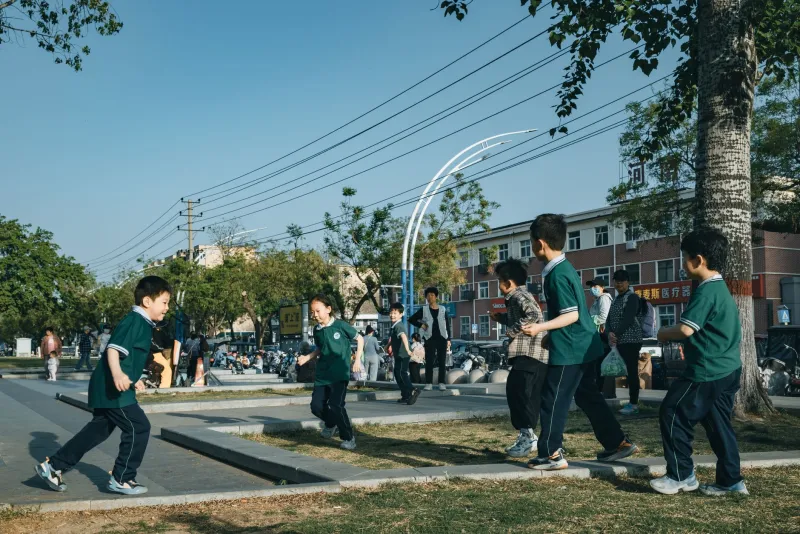
The most effective OSC models typically build in a real decompression window first—anywhere from 30 to 60 minutes of free play, outdoor time, or low-key activities before any academic expectations kick in. That window isn't wasted time. It's the reset that makes everything else possible.
From there, offering a dedicated but relaxed homework period—with staff available to help, not hover—gives kids who want to get it done a chance to do so. The key word is "available." There's a meaningful difference between a caring adult who can answer a question or help a child get unstuck, and a tutoring session where kids are being drilled or corrected through every problem.
Programs that strike this balance tend to produce kids who arrive home calmer, more engaged with their families, and yes—often more academically consistent over time. Because they're not burned out.
How to Tell If Your Child's Program Is Getting This Right
You don't need to audit the program schedule to get a sense of whether the balance is working. Your child will tell you, if you know what to look for.
A few signs the program might be leaning too heavily on structured academics:
- Your child seems tense or resistant when you mention after-school care
- They're complaining that it "feels like more school"
- Homework is always done, but they can't explain or recall what they worked on
- They come home wired and irritable rather than settled
- There's very little mention of play, friends, or anything fun happening there
On the flip side, signs a program is getting the balance right tend to look like this:
- Your child talks about what they did there, not just what they finished
- They come home with some energy left, not completely depleted
- Homework gets done reasonably consistently, but it's not the only story they tell
- They seem to have real relationships with the staff and other kids in the program
What Actually Helps With Academics After a Full School Day
If you're genuinely worried about your child keeping up academically, the most effective thing after-school care can do is probably not what you'd expect.
Physical activity has consistently been shown to improve cognitive function, focus, and memory consolidation. A child who gets outside and runs around for 45 minutes after school is often better equipped to tackle homework than one who sat down immediately. Social play builds executive function skills—planning, flexibility, impulse control—that directly support academic performance. Creative activities like art, building, or storytelling engage different parts of the brain and give the academic-processing centers time to rest and recharge.
In other words, the "non-academic" parts of a good OSC program are doing academic work. Just not in a way that shows up on a worksheet.
At Salisbury Day Care & OSC, we think about after-school hours as their own kind of essential learning time—just structured very differently from the school day. The goal isn't to extend the classroom. It's to give kids the space to recover, connect, and grow in ways the classroom simply can't offer.
The Bigger Picture
Parents are under a lot of pressure to make sure their kids are keeping up, and that pressure is completely valid. But after-school care that tries to solve academic anxiety by piling on more academics often makes things worse, not better.
The research is pretty consistent here: kids who get adequate downtime, movement, and play after school tend to perform better academically over time—not worse. The decompression isn't a detour from success. It's part of the path.
So the next time you're evaluating what a good after-school program looks like, it might be worth asking not just "do they help with homework?" but "do they give my kid room to actually be a kid for a little while first?" That question might tell you a lot more about whether the program is truly set up to help your child thrive.