Two Completely Different Kids: Understanding Why Your Child Acts One Way at Home and Another Way at Care

You pick up your child from care and the teacher smiles warmly. "She was wonderful today — so helpful, so patient with the other kids." You nod and smile back, quietly wondering if they're talking about the same child who melted down at breakfast because her toast was cut in triangles instead of rectangles.
Or maybe it's the reverse. Your kid is easygoing and cheerful at home, but you keep getting notes home saying he's been clingy, defiant, or struggling to cooperate in group settings. Either way, the disconnect feels unsettling. Like there are two versions of your child, and you're only seeing one of them.
Here's the thing: both versions are real. And the fact that they exist says something genuinely important about your child's development.
Why Kids Behave Differently in Different Environments
Children, especially young ones, don't yet have the emotional tools to behave consistently across every context they move through. Adults struggle with this too — think about how differently you act at work versus at home with your closest people. Kids just have a lot less practice managing it.
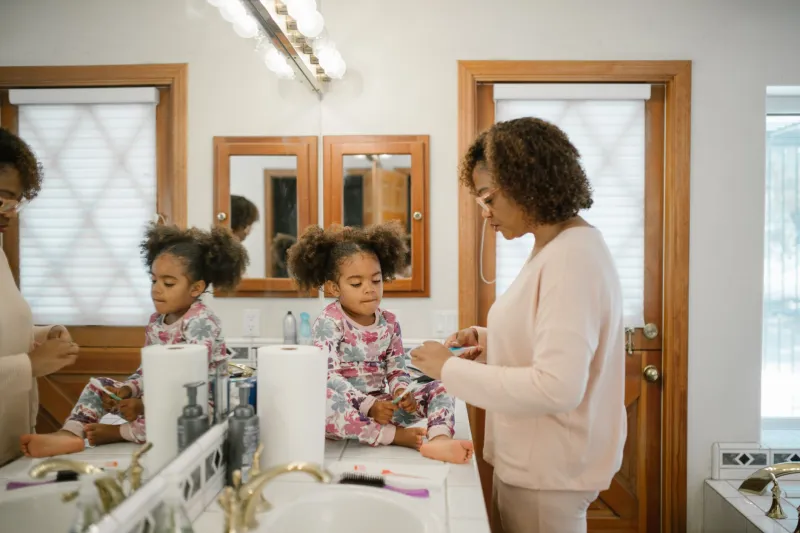
At home, children are in their most comfortable, lowest-stakes environment. You are their safe person. That means home is where they feel free to fall apart, test limits, and be completely unfiltered. It's not a sign that something is wrong — it's actually a sign that your relationship with them is secure. They trust you enough to show you their worst.
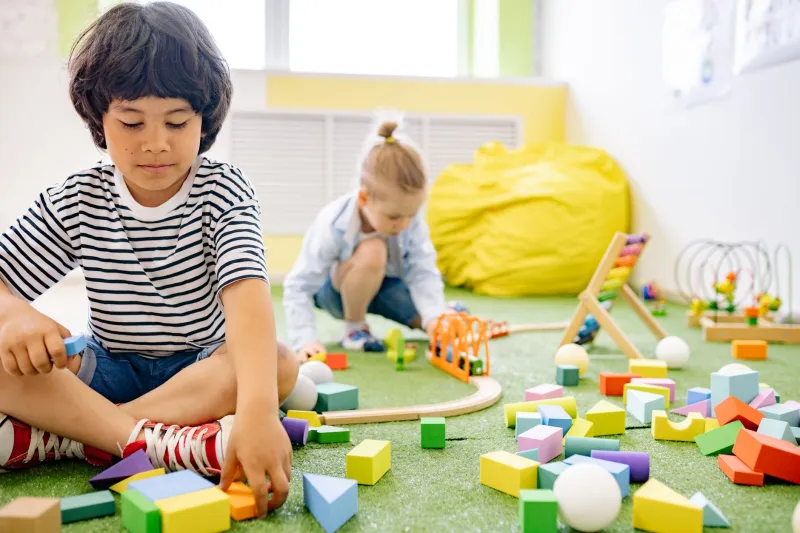
At care or school, the dynamic shifts entirely. There are social expectations, peers watching, unfamiliar adults, and a structure that requires them to regulate their emotions and behavior in ways home simply doesn't demand. Many kids rise to that challenge and present a more composed, cooperative version of themselves — even if it costs them energy they later spend at home.
The Concept of "Safe Base" Behavior
Developmental psychologists have a term for what happens when kids unravel at home after holding it together all day: they call it "safe base" behavior. Your child is essentially downloading the emotional load of the day onto the person they trust most — you.
This is deeply normal. A child who is reserved or anxious at care but loud and demanding at home isn't being manipulative. They're doing exactly what secure attachment is supposed to allow: using their primary relationship as a pressure release valve.
On the flip side, a child who is confident and social at care but shy and withdrawn at home might simply be spending their social energy in the environment that requires it most, then retreating to recharge in private. Introverted kids especially tend to do this.
When the Difference Feels Like More Than a Phase
Most of the time, behavioral differences between home and care are completely typical. But there are moments when the gap warrants a closer look.
If your child consistently seems fearful, unusually quiet, or reluctant to go to care — and that's a change from how they used to feel — it's worth a conversation with their caregivers. The same goes for persistent aggression or withdrawal that's showing up in both settings, not just one.
What you're watching for isn't a child who acts differently in different places. That's normal. You're watching for a child who seems distressed in one environment specifically, or whose behavior is escalating in ways that feel new and unexplained.
At Salisbury Day Care & OSC, we think one of the most valuable things we can do is keep that line of communication open. When parents and caregivers are regularly sharing what they're noticing — even the small stuff — it becomes a lot easier to spot patterns that actually need attention versus patterns that are just part of how kids grow.
What This Split Tells You About Their Emotional Development
Here's a reframe that might help: a child who can shift their behavior based on context is actually developing a critical life skill. Social adaptability — the ability to read a room, adjust to expectations, and modulate how you present yourself — is something adults spend years trying to master.
Your child is practicing that in real time, every single day.
The fact that they're doing it imperfectly, and that the seams sometimes show at home, doesn't mean something is broken. It means they're working hard. They're learning that the world has different rules in different places, and they're figuring out how to navigate that — which is genuinely impressive when you stop and think about how young they are.
How Parents and Caregivers Can Work Together
The most useful thing you can do when you notice a behavioral disconnect is resist the urge to immediately fix it, and instead get curious about it.
Talk to your child's caregivers not just when something seems wrong, but regularly. Ask open-ended questions: What does my child seem to enjoy most? Who do they gravitate toward? Are there times of day that seem harder for them? That kind of information helps you build a fuller picture of who your child is becoming — not just who they are in your living room.
At the same time, share what you're seeing at home. If your child has been struggling with transitions lately, or going through something big like a new sibling or a family move, caregivers need that context. It changes how they read behavior and how they respond to it.
The goal isn't to make your child behave identically in every setting. The goal is to make sure both you and their care team understand enough about the whole child to support them well — wherever they are.
A Reminder for the Days It Feels Confusing
Parenting involves a lot of moments where you feel like you don't fully know your own kid. Those moments can be disorienting. But a child who shows you a different face depending on where they are isn't hiding from you — they're just bigger than any single version of themselves.
The child who cooperates beautifully at care and tests every boundary at home? Both of those are your kid. The child who is bold and talkative at home but watches quietly from the edge of the group at care? Also your kid. These aren't contradictions. They're facets.
Your job — and ours — is to keep showing up for all of them.