Stop Filling Every Minute: Why the Best Thing a Care Program Can Do Is Leave Kids Alone
The Overscheduled Kid Is Everywhere—And They're Exhausted
Take a look at the average American kid's week. School from 8 to 3. Soccer practice Tuesday. Piano Wednesday. Tutoring Thursday. A structured after-school program with homework help, organized games, and a craft rotation every single day. On paper, it looks great. Productive. Intentional.
But here's what a lot of developmental researchers—and honestly, a lot of tired kids—are quietly telling us: all that structure might be working against us.
When every moment is accounted for, when there's always an adult directing the next activity, when "free time" actually means "choose from these four approved options," kids lose something important. They lose the chance to be genuinely, uncomfortably, productively bored.
And boredom, it turns out, is where a lot of the good stuff happens.
What Boredom Actually Does to a Developing Brain
The word "boredom" carries a lot of baggage. Parents hear it and think: wasted time, screen creep, kids getting into trouble. But neuroscientists and child development specialists have a very different read on it.
When kids aren't being externally stimulated, their brains don't just go quiet. They actually shift into a different mode of processing—what researchers sometimes call the default mode network. This is the mental space where imagination kicks in, where kids start making unexpected connections, where they begin to problem-solve without being handed a prompt.
In plain terms: boredom is the on-ramp to creativity.
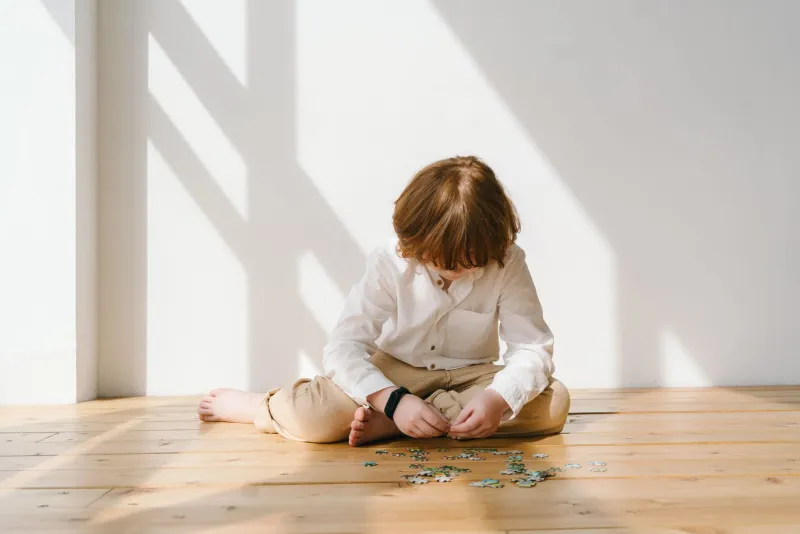
A child who is told "here's 45 minutes, do whatever you want" and then left largely alone will, after the initial restlessness passes, almost always invent something. A game with weird rules. A fort that took three tries to get right. A story told entirely in made-up languages. A business plan for selling rocks to neighbors (we've seen this one). None of that happens when someone is handing them the next activity on a laminated schedule.
The Pressure Parents Feel Is Real—But It's Worth Examining
Here's something we want to acknowledge before going any further: the pressure to keep kids busy isn't irrational. It comes from real places.
Working parents feel guilty about the hours they're away, so they compensate by making sure every moment is "worthwhile." Social media makes it look like everyone else's kids are doing more, learning more, achieving more. And the cultural narrative around childhood success is relentless—start early, stay ahead, don't fall behind.
So when a care program says "we're building in some genuine downtime," it can feel counterintuitive. Maybe even a little irresponsible.
It isn't. In fact, the research increasingly points the other way. Kids who have regular access to unstructured time show stronger executive function, better emotional regulation, and more developed social skills than their heavily programmed peers. They're better at managing frustration. They're more likely to stick with hard problems. They negotiate with other kids more effectively because no adult is mediating every interaction.
Unstructured time isn't a gap in programming. It's programming.
What This Looks Like in a Quality Care Setting
There's a difference between unstructured time and neglect, and it's worth being clear about that.
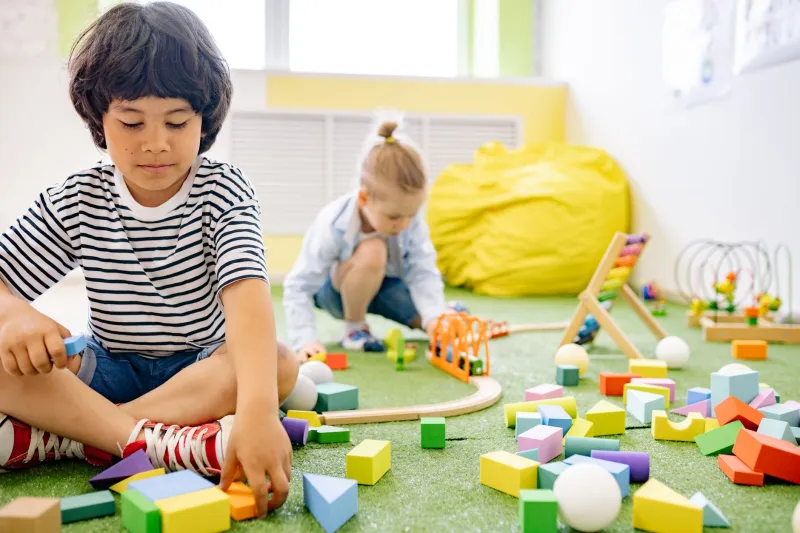
At a good daycare or after-school program, intentional downtime doesn't mean staff disappear or kids are left to fend for themselves. It means the environment is set up to support open-ended exploration—loose materials, open spaces, mixed-age groupings where older kids naturally take on mentorship roles with younger ones—while adults step back from directing and shift into observing.
It might look like a corner of the room stocked with cardboard, tape, fabric scraps, and zero instructions. It might look like outdoor time where the only rule is "stay in the yard." It might look like 30 minutes after homework where kids can do basically anything that doesn't involve a screen.
What staff are watching for in those moments isn't chaos. They're watching for the natural arc that almost always emerges: initial restlessness, a spark of an idea, negotiation with peers, problem-solving, and eventually something that looks a whole lot like flow.
That arc? That's development happening in real time.
The Moment Boredom Becomes a Breakthrough
Every care provider has stories. The afternoon a group of five-year-olds spent an hour building an "animal hospital" out of blocks and paper towels, complete with assigned roles and a waiting room. The rainy day a couple of eight-year-olds wrote, directed, and performed a three-act play for an audience of stuffed animals. The kid who spent two weeks—unprompted—designing a more "fair" version of tag and then teaching it to the whole group.
None of those things were on a lesson plan. None of them had a learning objective attached. And all of them were deeply, genuinely educational in ways that structured activities rarely match.
Because when kids choose what to create, they invest in it differently. The stakes feel real. The failure is real too, which means the resilience they build getting through it is real.
What Parents Can Do at Home
This doesn't have to stop at pickup. A few small shifts at home can reinforce what quality downtime at care is building:
Resist the urge to fill silence. When your kid says "I'm bored," try responding with "I bet you'll figure something out" instead of handing them a solution. The discomfort is temporary. What comes after it is worth waiting for.
Audit the schedule. If your child has structured activities five days a week, consider whether one of those slots could become genuinely free time. Not screen time. Not organized playdates. Just... open afternoon.
Keep the good stuff accessible. Art supplies, building materials, old magazines, outdoor space—these are the raw ingredients of unstructured play. You don't need to organize them into a project. Just make them available and step back.
Let boredom run its course. The restless phase, where kids complain and wander and can't seem to settle, usually lasts 10 to 20 minutes. Most parents intervene before it resolves. Try waiting it out. What happens on the other side is usually worth it.
The Bigger Picture
We're raising kids who will need to solve problems we can't anticipate yet, in fields that may not exist today, alongside people from wildly different backgrounds. The skills that will serve them in that world—creativity, adaptability, self-direction, collaboration—aren't built through more enrichment. They're built in the in-between moments. The slow afternoons. The "I don't know what to do" stretches that eventually become "look what I made."
At Salisbury Day Care & OSC, we think nurturing minds sometimes means getting out of the way and letting them wander. Because the kids who learn to sit with boredom—and push through it into something new—are the ones who grow up knowing they can figure things out.
And that might be the most important thing we can give them.