When the School Bell Rings, Something Snaps: The Real Science Behind Your Child's After-School Meltdowns

You've seen it a hundred times. Your kid apparently had a totally fine day at school. The teacher says they were great. No incidents, no drama, no complaints. Then they walk into your house—or get picked up from care—and within ten minutes, they're on the floor crying because their snack came in the wrong color bowl.
You're not dealing with a difficult child. You're dealing with a completely depleted one.
The afternoon meltdown is one of the most misunderstood moments in childhood, and it trips up even the most thoughtful parents. Let's break down what's actually happening inside your child's brain and body during those first hours after the school bell rings.
Your Child's Brain Has Been Working Overtime All Day
Here's the thing most parents don't fully appreciate: school is exhausting in ways that have nothing to do with physical activity. From the moment your child sits down in that classroom, their brain is doing heavy lifting—managing attention, following multi-step instructions, reading social cues, regulating their emotions around peers and teachers, and suppressing impulses that feel totally natural to a developing kid.
That last part matters more than almost anything else. Behavioral scientists call it inhibitory control, and it's one of the most energy-intensive things a young brain can do. Every time your child wanted to get up and move but didn't, every time they felt frustrated but stayed quiet, every time they had to wait their turn or keep their hands to themselves—those moments weren't free. They cost cognitive fuel.
By 3 p.m., that fuel tank is running close to empty.
The Stress Hormone Nobody Talks About
Cortisol—the body's primary stress hormone—follows a natural daily curve. In kids, cortisol levels are typically highest in the morning, which helps them get alert and activated for the day. As the afternoon rolls in, that curve starts to dip.
At the same time, the demands placed on kids don't necessarily drop. End-of-day transitions, packing up, getting on buses, navigating pickup lines, switching from school mode to home mode—all of that requires executive function at exactly the moment when the brain's regulatory resources are most stretched.
For children who are already prone to emotional sensitivity, or who had a particularly demanding day socially or academically, that combination can tip them right into dysregulation. It's not drama. It's biology.
Why They Save It for You (And Why That's Actually Good News)
One of the more frustrating aspects of the after-school meltdown is that it so often happens at home—or in the car on the way home—rather than at school. Parents sometimes feel like their child is choosing to behave worse around them, which can sting.
But flip the script: your child held it together all day because they were somewhere that required it. The moment they're in a space where they feel safe and unconditionally accepted, the walls come down. The meltdown isn't a sign that something's wrong with your relationship—it's a sign that your child trusts you enough to fall apart.
That doesn't make it easier to handle in the moment. But it reframes the whole picture.
What Kids Actually Need in That Window
This is where a lot of well-meaning adults get it wrong. The instinct when a child is melting down is to add more structure—give them a snack, sit them down for homework, run them through a routine. And while structure matters, piling on demands right after school is often the worst possible response to a depleted kid.
What children typically need in that first hour after school looks more like this:
Decompression time. Unstructured, low-demand time where nothing is expected of them. This might look like sitting quietly, drawing, watching something low-key, or just lying on the couch. It doesn't have to be productive.
Food—real food, not just a sugar hit. Blood sugar drops significantly over the course of a school day. A snack with protein and complex carbohydrates helps stabilize mood and energy in a way that a handful of crackers or a juice box simply won't.
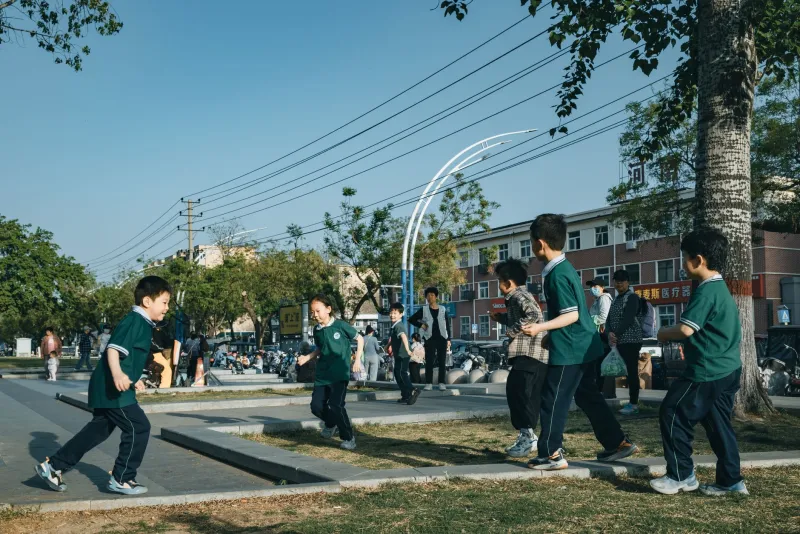
Physical movement. Not organized, goal-oriented activity—just movement. Running around outside, riding a bike, kicking a ball. Physical activity helps metabolize stress hormones and literally changes the brain's chemistry.
Low-pressure connection. Kids often don't want to debrief their entire day the moment they see you. A warm, calm presence—without interrogation—does more for emotional recovery than a round of "how was school?" ever will.
How Good After-School Programs Get This Right
At Salisbury Day Care & OSC, this science isn't just theoretical—it shapes how we structure the afternoon hours for the kids in our care. We know that children arriving after school aren't arriving with a full tank. They're arriving depleted, and the worst thing we can do is treat that first hour like an extension of the school day.
That means building in genuine downtime before any structured activities. It means offering snacks that actually fuel recovery rather than just filling a gap. It means letting kids choose how they move and play during that transition window, rather than directing every minute.
It also means training our staff to read the room. A child who's quiet and withdrawn after school isn't being antisocial—they're recovering. A child who's bouncing off the walls isn't misbehaving—they're releasing. Both of those responses are completely normal, and good care programs meet kids where they are rather than where adults wish they were.
When to Be Concerned vs. When to Exhale
Most after-school meltdowns are developmentally normal and resolve with the right kind of transition support. But it's worth paying attention if the intensity or frequency seems to be escalating, or if your child is showing signs of distress that go beyond typical afternoon fatigue.
If your child is consistently inconsolable, if the meltdowns are lasting longer than they used to, or if they're expressing real anxiety about going to school or care, those are signals worth exploring with a pediatrician or child development professional. Sometimes what looks like a behavior issue is actually a sleep problem, a sensory processing challenge, or something happening socially at school that needs attention.
But for the vast majority of families? The 3 p.m. collapse is just a kid telling you—in the only language they have—that they worked really hard today and they need a minute.
The Shift That Changes Everything
When parents stop seeing the after-school meltdown as a problem to solve and start seeing it as information to respond to, something shifts. The frustration doesn't disappear overnight, but the dynamic changes. You're no longer fighting your child's behavior—you're working with their biology.
That's a much better place to start.