The 3 PM Hunger Crisis: What Your Child's Body Is Screaming After School
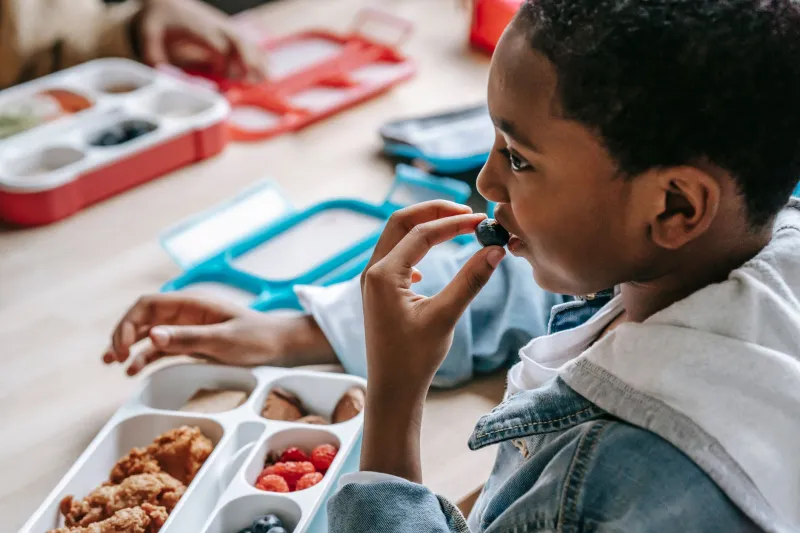
Ask most parents which meal matters most for their kid's development, and you'll almost always get the same answer: breakfast. And sure, breakfast matters. Nobody's arguing that. But here's the thing most people don't talk about—by the time your child walks out of school at 3 PM, their body is running on fumes in a way that breakfast stopped being relevant to hours ago.
That afternoon window? It's not just snack time. It's a biological turning point that quietly determines how the rest of your child's day goes—their mood, their focus, their ability to handle frustration, and even how well they sleep that night.
What's Actually Happening Inside Your Child at Dismissal Time
Kids eat lunch somewhere between 11 AM and noon at most schools. By the time that final bell rings, four hours have passed. For a growing child—whose brain alone consumes about 20% of their total caloric intake—that's a long stretch between fuel stops.
Blood sugar, which the brain depends on almost exclusively for energy, has been steadily declining since lunch ended. And unlike adults, who've had years to develop coping strategies for hunger, kids don't have the emotional regulation tools to manage what a blood sugar crash actually feels like. They just feel it—and they act it out.
That's why so many parents and caregivers notice that the 3 to 5 PM stretch is when kids are at their most volatile. The crying over small things. The snapping at siblings. The complete inability to focus on anything for more than two minutes. That's not bad behavior. That's biology.
The Myth of the "Light Snack"
Here's where a lot of caregiving situations get it wrong: they treat the after-school snack like a placeholder. A handful of crackers, a juice box, maybe a granola bar from a box that's been sitting on the shelf since last Tuesday. Something to tide kids over until dinner.
But a snack that's all simple carbohydrates—crackers, pretzels, most packaged cookies, sweetened drinks—actually makes things worse. It causes a fast spike in blood sugar followed by an equally fast crash, usually hitting about 45 minutes to an hour after eating. So instead of stabilizing your child, you've accidentally set up a second crash on top of the first one.
Researchers studying childhood nutrition have consistently found that the composition of an afternoon snack—not just its existence—directly impacts cognitive performance and emotional regulation in the hours that follow. Kids who eat snacks combining protein, healthy fat, and complex carbohydrates show measurably better attention and fewer behavioral incidents in the late afternoon compared to kids who eat simple-carb snacks or nothing at all.
What the Right Snack Actually Looks Like
This doesn't need to be complicated. A good after-school snack hits three marks: it has some protein, it has some fat, and it has carbohydrates that digest slowly rather than all at once. That combination keeps blood sugar stable instead of spiking and crashing.
Some examples that actually work:
- Apple slices with peanut or almond butter — the fat and protein in the nut butter slow down how fast the natural sugars in the apple hit the bloodstream
- Cheese and whole grain crackers — protein and fat from the cheese, fiber from the crackers
- Hummus with veggies or pita — plant-based protein, fiber, and a satisfying texture kids actually enjoy
- Greek yogurt with a little fruit — high protein, some natural sweetness, and probiotics as a bonus
- Hard-boiled eggs with a piece of fruit — simple, portable, and genuinely effective
What's notably absent from that list: juice boxes, fruit snacks, sugary granola bars, and most packaged "kids' snacks" that are essentially candy with better branding. Those aren't snacks. They're blood sugar time bombs.
Timing Is Everything
It's not just what kids eat—it's when. The longer a child waits after dismissal to eat, the deeper the blood sugar crash gets, and the harder it is to pull them back up. Ideally, kids should be eating within 30 minutes of getting out of school.
This is one area where quality after-school care programs can make a real difference. When a facility has a structured, intentional snack time built into the early part of the afternoon—not as an afterthought, but as an actual priority—kids arrive at that food before they've fully bottomed out. They eat better, they're calmer, and the entire rest of the afternoon goes more smoothly.
When you're evaluating care options, it's worth asking specific questions: When exactly is snack time? What's typically served? Is it something with actual nutritional value, or is it whatever was cheapest in bulk? The answers tell you a lot about how a program thinks about child wellbeing.
The Dinner Connection Nobody Talks About
Here's something that surprises a lot of parents: a well-timed, nutritionally solid afternoon snack doesn't ruin dinner. It actually makes dinner better.
When kids skip the afternoon snack or eat something that causes a crash, they often arrive at dinner completely dysregulated—too hungry, too irritable, and too overwhelmed to sit calmly at a table and eat a real meal. They either inhale everything in front of them or refuse to eat anything at all because their body has moved past hunger into a kind of stressed shutdown.
A child who had a good snack at 3 PM, on the other hand, arrives at dinner in a much more balanced state. They're hungry enough to eat, but not so ravenous that they can't function. Meals tend to go smoother. There's more actual conversation. Everyone's a little more human.
What Parents Can Do Right Now
If your child comes home to you after school, build that snack into the first 30 minutes. Don't let homework, screens, or the general chaos of the afternoon push it back. Feed them first. Everything else works better after that.
If your child is in after-school care, have a conversation with the program about what they're serving and when. A good program will have a clear answer and probably appreciate that you asked. If the answer is vague or the snack sounds like an afterthought, that's worth paying attention to.
And if you're packing a snack from home, skip the prepackaged stuff. Five minutes of actual food prep—nut butter on apple slices, some cheese and crackers, a little container of hummus—will do more for your child's afternoon than anything that comes in a crinkly wrapper with a cartoon character on it.
Breakfast still matters. Nobody's taking that away. But 3 PM? That's when the real work of keeping a kid functional, focused, and emotionally intact actually happens. Don't sleep on it.