Why the Walls, Lights, and Layout of a Care Space Are Quietly Running the Show
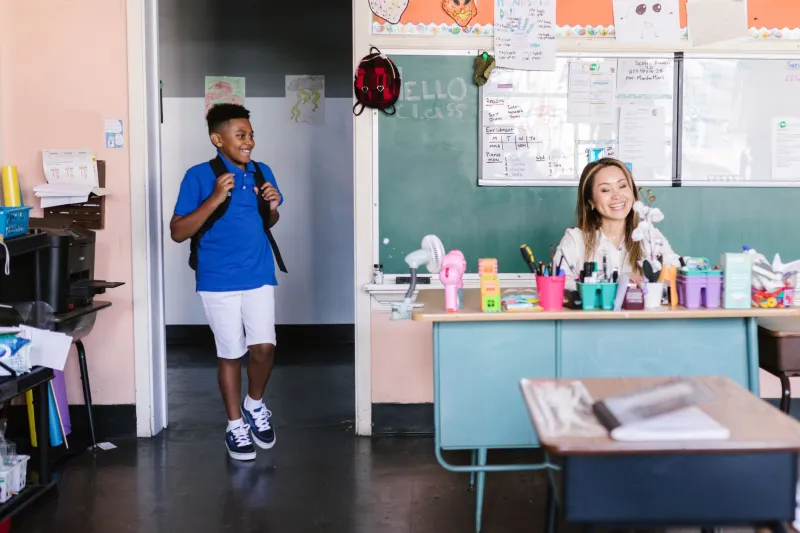
There's a concept in early childhood education circles called the "third teacher." The first teacher is the adult in the room. The second is the other kids—peers who push, challenge, and mirror each other constantly. The third? The space itself.
It sounds a little abstract until you start looking at the research. Then it becomes hard to unsee. The physical environment of a care setting isn't neutral. It's not just a container for activity. It's an active participant in how your child regulates their emotions, sustains attention, and moves through their day. And most parents have no idea this is happening.
Let's break down what's actually going on.
Your Child's Brain Is Reading the Room—Literally
Children's nervous systems are far more sensitive to environmental input than adults realize. A grown-up can walk into a loud, brightly lit room and mentally filter out most of the chaos. Kids—especially younger ones—don't have that same filtering capacity yet. Their brains are still building the neural architecture for sensory regulation, which means the environment does a lot of that work for them.
Neuroscience research has consistently shown that sensory inputs like light intensity, ambient noise, spatial layout, and even color temperature can trigger measurable changes in cortisol levels, heart rate, and attention span in children. In plain terms: the room your kid is sitting in is either helping their brain calm down and focus, or it's quietly revving them up in ways that make self-regulation much harder.
This isn't a small thing. For kids spending several hours a day in after-school care or a daycare setting, those environmental signals are stacking up hour after hour.
What Lighting Actually Does to Kids
Fluorescent overhead lighting—the kind that's been standard in institutional settings for decades—is increasingly recognized as a problem for children. It tends to be harsh, high-contrast, and occasionally flickers at a frequency that's imperceptible to most adults but genuinely disruptive to developing visual systems. Studies have linked prolonged exposure to this type of lighting with increased irritability, reduced concentration, and even more frequent behavioral incidents.
Natural light, by contrast, has the opposite effect. Exposure to daylight helps regulate circadian rhythms, supports serotonin production, and has been associated with better mood and improved attention in school-age children. Care facilities that prioritize windows, skylights, or full-spectrum lighting aren't just making aesthetic choices—they're making neurological ones.
Warm, adjustable lighting in quieter areas also matters. Spaces designed for winding down after a busy school day benefit enormously from softer light that signals to a child's brain: this is a place to breathe.
Color Isn't Just Decoration
There's a reason hospitals don't paint their walls fire-engine red. Color psychology is well-established in adult environments, but it's even more relevant for children whose emotional regulation systems are still under construction.
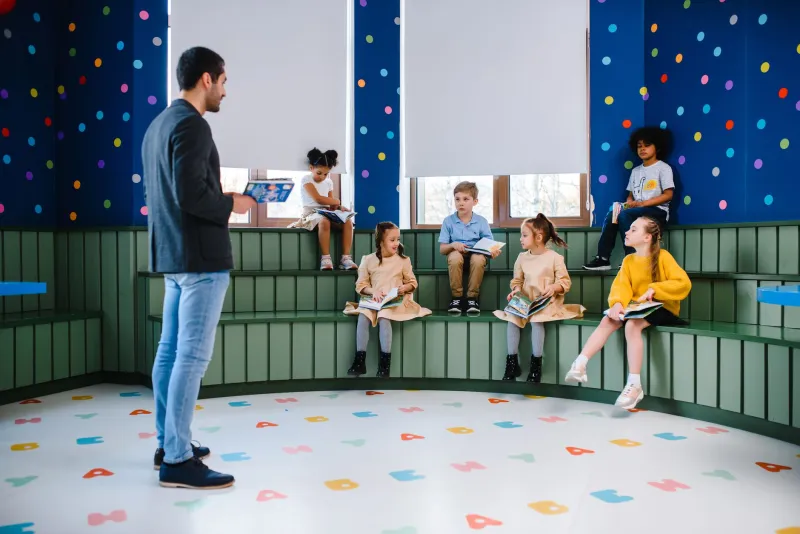
Bright, saturated primary colors—especially in large doses across walls and ceilings—can elevate arousal levels. That might seem great for a creative play zone, but it's counterproductive in a space meant for homework, reading, or calm social interaction. Softer, cooler tones like muted blues, sage greens, and warm neutrals tend to have a measurably calming effect. They lower visual stimulation without making a space feel cold or institutional.
The best-designed care environments use color intentionally and differently across zones. A vibrant art corner? Sure, bring some energy in. A reading nook or quiet reflection space? Dial it way back.
Noise Is the Hidden Disruptor
Walk into almost any busy care facility in the late afternoon and you'll hear it: a wall of overlapping sound. Kids talking, chairs scraping, doors banging, background music competing with everything else. For a child who just spent six hours at school holding it together, that auditory environment can be the thing that finally breaks the dam.
Chronic background noise—even at levels that don't seem extreme—has been shown to impair working memory and increase stress hormone production in children. It's not just about volume. It's about unpredictability. Sudden, irregular noise is especially taxing on young nervous systems because the brain keeps having to assess whether each sound requires a response.
Well-designed care spaces think about acoustics deliberately. Soft materials like rugs, upholstered furniture, and acoustic panels absorb sound rather than bouncing it around. Separate zones with physical barriers—even low shelving—create pockets of relative quiet within an otherwise active environment. These aren't luxuries. For a lot of kids, they're what makes the difference between a productive afternoon and a meltdown by 4 p.m.
Open Spaces vs. Cozy Corners: Why Both Matter
Children don't need the same kind of space all afternoon. Right after school, many kids need to move—to decompress physically after a long day of sitting still. Large, open areas for active play or free movement serve a real neurological function here. Movement helps metabolize stress hormones and reset the nervous system.
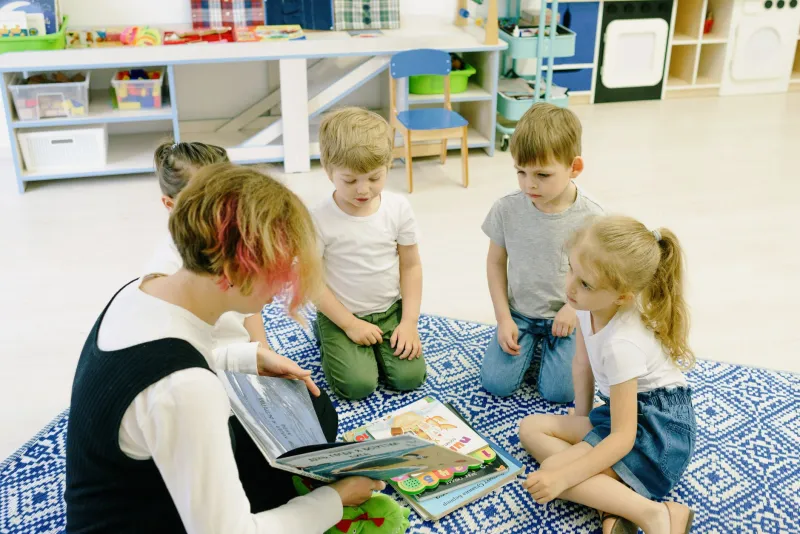
But later in the afternoon, as energy levels shift and the need for focused activity or quiet social time increases, smaller, more enclosed spaces become important. Research on what's sometimes called "loose parts" environments shows that children gravitate naturally toward semi-enclosed nooks and smaller-scale spaces when they need to feel safe, concentrate, or have a private conversation with a friend.
Think of it like this: open spaces say move, explore, be big. Cozy corners say settle, focus, be small. Kids need both messages available to them across the course of an afternoon, and good care environments make that possible.
What to Actually Look for When Evaluating a Care Program
If you're a parent in Salisbury trying to figure out whether a care facility has thought about any of this, here are some practical things to notice on a tour:
- Does natural light reach most of the room? Or is the space dependent on overhead fluorescents?
- Are there distinct zones for different kinds of activity? An active area, a quieter area, and spaces in between?
- What's the noise level like during active hours? Not whether it's loud—kids are loud—but whether there are pockets where a child could actually hear themselves think.
- Is the furniture scale appropriate? Furniture sized for children (not just smaller adult furniture) gives kids a sense of environmental control that actually reduces anxiety.
- Are there soft materials and textures present? Rugs, cushions, and fabric panels aren't just cozy—they're acoustic tools.
- Does the color palette shift between zones? A facility that uses color intentionally across different areas is one that's thinking about environment as more than aesthetics.
At Salisbury Day Care & OSC, these aren't afterthoughts. The way a space is designed directly reflects what a program believes about children—whether it sees them as passive recipients of care or as whole people whose brains and bodies are constantly responding to the world around them.
The Space Is Always Teaching Something
You can have the most skilled, caring staff in the world, and a poorly designed environment will still work against them. Conversely, a thoughtfully built space can support a child's regulation, creativity, and focus even before a single adult says a word.
That's the third teacher. And it's on the clock every single minute your child is in care.