When Kids Say 'I'm Bored,' That's Actually the Beginning of Something Great

It happens in every household, every classroom, and yes, every after-school program in America. A kid wanders over, slumps against the wall, and delivers that familiar complaint: "I'm bored."
The instinct for most adults? Fix it. Fast. Hand over a tablet, suggest an activity, redirect them toward something structured. We treat boredom like a small emergency — a gap that needs filling before something goes wrong.
But here's the thing: that instinct, however well-meaning, might actually be getting in the way of something important.
Boredom Isn't the Problem. It's the Starting Line.
Developmental researchers have been saying it for years, but it hasn't quite filtered into everyday parenting culture yet: boredom is a precursor to creativity. It's the mental state that forces a child's brain to shift gears — to stop consuming and start generating.
When a child has nothing handed to them, their brain doesn't just go quiet. It starts working. It wanders, experiments, revisits ideas, and eventually lands somewhere unexpected. That wandering? That's imagination warming up.
Psychologists refer to this as self-directed play — the kind that emerges not from adult instruction but from a child's own internal motivation. And it turns out, this type of play is extraordinarily powerful. Kids who regularly engage in self-directed play tend to develop stronger problem-solving skills, better emotional regulation, and more flexible thinking than kids whose time is consistently structured for them.
In other words, the child who figures out how to entertain themselves is building a mental toolkit that no worksheet or organized activity can replicate.
Why We're So Uncomfortable Letting It Sit
American culture has a complicated relationship with idle time. Productivity is valued. Busyness is worn like a badge. For parents already juggling work, schedules, and the general chaos of family life, an unhappy kid complaining about having nothing to do can feel like a personal failure — like you haven't provided enough.
After-school programs can fall into the same trap. The pressure to keep kids engaged, entertained, and visibly occupied is real. A room full of bored-looking kids doesn't exactly inspire confidence. So activities get stacked. Schedules get tighter. Every minute gets a purpose.
But filling every gap isn't the same as nurturing every child.
What a Quality Program Actually Does When a Kid Says They're Bored
At Salisbury Day Care & OSC, we've learned something over the years: how a caregiver responds to "I'm bored" matters enormously. There are two very different paths you can take.
Path one is the easy one — redirect immediately. Offer a structured activity, turn on something, organize a group game. The boredom disappears. Problem solved. Except it isn't, really. You've just trained the child to outsource their own entertainment, and you've cut off whatever creative process was just beginning to stir.
Path two takes a little more patience. You acknowledge the feeling without rushing to resolve it. You might ask a few open-ended questions — "What have you felt like doing lately that you haven't tried?" or "Is there something you started last week that you didn't finish?" — and then you step back. You let the discomfort do its work.
This isn't neglect. It's trust. Trust that the child has the capacity to find their own way through that restless, uncomfortable feeling toward something genuinely engaging.
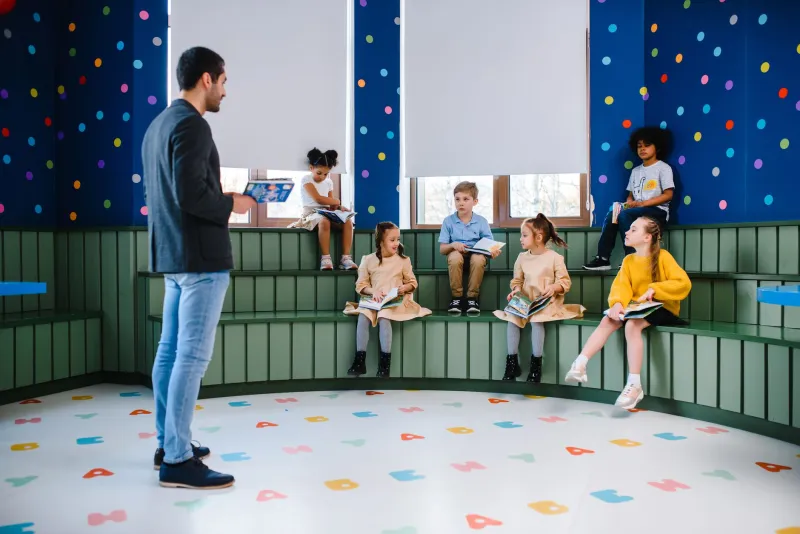
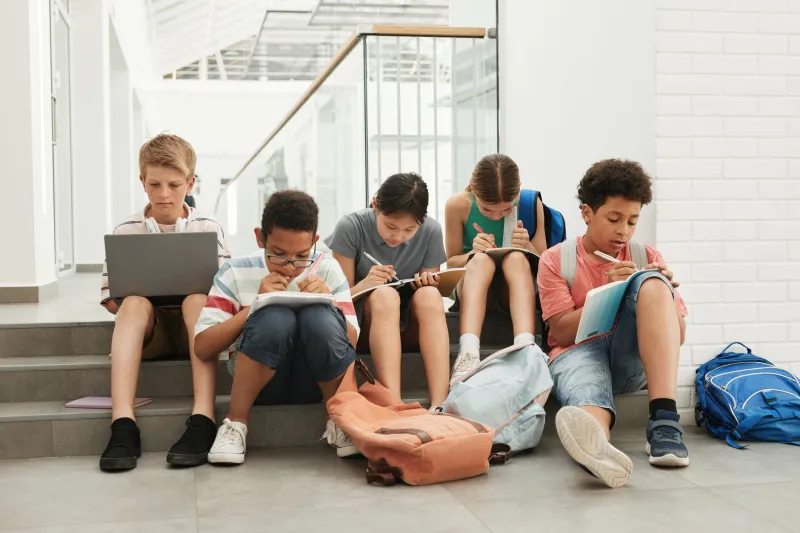
A well-run after-school environment supports this by offering open-ended materials — art supplies, building blocks, loose parts, books, outdoor space — without attaching instructions to them. There's no right answer, no finished product expected. Just possibility.
The Difference Between Unstructured and Unsupported
It's worth being clear about something: letting kids sit with boredom doesn't mean leaving them completely on their own with no guidance whatsoever. There's a meaningful difference between unstructured time and unsupported time.
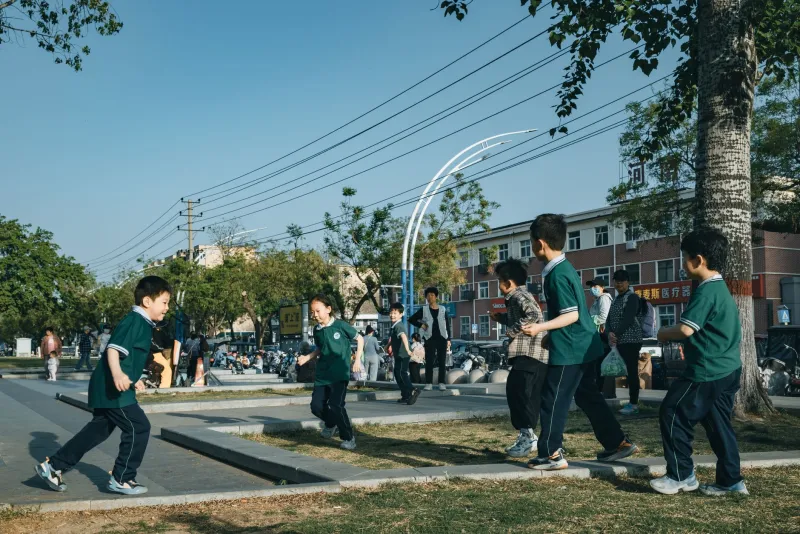
A good care program creates the conditions for self-directed exploration while still having attentive adults nearby. Caregivers observe. They notice when a child genuinely needs a nudge versus when they're just testing the waters. They celebrate the weird little projects that emerge — the blanket fort that took forty-five minutes to engineer, the rock collection that became an entire classification system, the spontaneous drama performance that involved every kid in the room.
These moments don't happen on a schedule. They can't be planned. They arise from boredom, from that restless searching that eventually finds its own direction.
What Kids Are Actually Learning When They're 'Doing Nothing'
Let's break down what's happening developmentally during unstructured, self-initiated play:
Self-regulation. When kids choose their own activities, they practice managing their attention, frustration, and persistence without an adult directing them.
Creative thinking. Open-ended time is where imagination lives. Kids invent games, stories, and scenarios that reflect their own inner world — and that creative muscle gets stronger every time it's used.
Problem-solving. Boredom often leads to challenges kids set for themselves — building something, figuring something out, making something work. These self-imposed challenges are incredibly effective learning experiences because the motivation is entirely internal.
Resilience. Learning to tolerate an uncomfortable feeling — like boredom — and move through it independently is one of the foundational skills for emotional resilience. Kids who are always rescued from discomfort don't get to practice that.
A Note for Parents
If your child comes home from care and says they were bored at some point during the afternoon, try not to read that as a red flag. It might actually be the opposite.
Ask them what they ended up doing. You'll often find that the boredom led somewhere interesting — a conversation they hadn't expected, a game they invented, a creative project that came out of nowhere. Those are the stories worth listening to.
And if you're ever tempted to fill every evening hour with activities and screens, consider leaving one window of time deliberately empty. Not as punishment, not as an experiment — just as breathing room. You might be surprised what your kid does with it.
The Bigger Picture
We talk a lot about preparing kids for the future. We think about academics, social skills, emotional intelligence. But one of the most quietly important things we can do is resist the urge to constantly curate their experience.
Kids who learn to navigate boredom become adults who can handle ambiguity, generate their own ideas, and find meaning without needing someone else to hand it to them. That's not a small thing. That's actually kind of everything.
So the next time a child wanders over and says they're bored, take a breath before you fix it. The best thing might be to smile, ask a question, and get out of the way.