Empty Space Is the Point: What Happens in Your Child's Brain When Nothing Is Scheduled

The Assumption That's Worth Questioning
If you've ever toured a care program and felt quietly impressed by a wall-to-wall activity calendar, you're not alone. Most of us have been conditioned to read busyness as quality. Full schedules feel safe. They feel productive. They signal that someone is on top of things.
But here's the thing — some of the most important developmental work happening in a child's brain doesn't show up on any schedule at all.
It happens in the quiet moments. The unscripted ones. The stretches of time that, from the outside, might look a whole lot like nothing.
What Neuroscience Actually Says About Downtime
When a child's brain isn't being directed toward a specific task, it doesn't go offline. It shifts into what researchers call the default mode network — a state of internal processing that's deeply connected to creativity, self-reflection, emotional regulation, and problem-solving.
Think of it like this: structured activities are the input. The quiet, low-stimulation spaces in between? That's where the brain actually files what it learned, makes unexpected connections, and starts generating original thought.
Studies from developmental psychology have shown that children who regularly experience unstructured, low-demand time demonstrate stronger executive function skills — things like impulse control, flexible thinking, and the ability to manage frustration. These aren't soft extras. They're foundational to how a child learns, relates to others, and handles the inevitable curveballs of everyday life.
And yet, as a culture, we've become increasingly uncomfortable with letting kids just... sit with themselves for a minute.
Why 'Boredom' Gets a Bad Reputation
Part of the problem is the word itself. Boredom sounds like failure — like something went wrong, like someone dropped the ball. When a child says "I'm bored," the instinct for most adults is to immediately fix it. Hand over a device. Suggest an activity. Fill the void.
But that initial discomfort a child feels when there's nothing structured to latch onto? That's actually the on-ramp to something remarkable.
The restlessness that comes before imagination kicks in — that's productive boredom. It's the brain searching for its own solution when an external one isn't handed over. And every time a child is allowed to push through that uncomfortable pause and find their own way to engage, they're building a mental muscle that no organized craft project can replicate.
The problem isn't boredom. The problem is that we've never learned to trust it.
What Quality Care Programs Do Differently
At Salisbury Day Care & OSC, we think about this a lot. A thoughtfully designed care program isn't just about what's on the schedule — it's equally about what's deliberately left off of it.
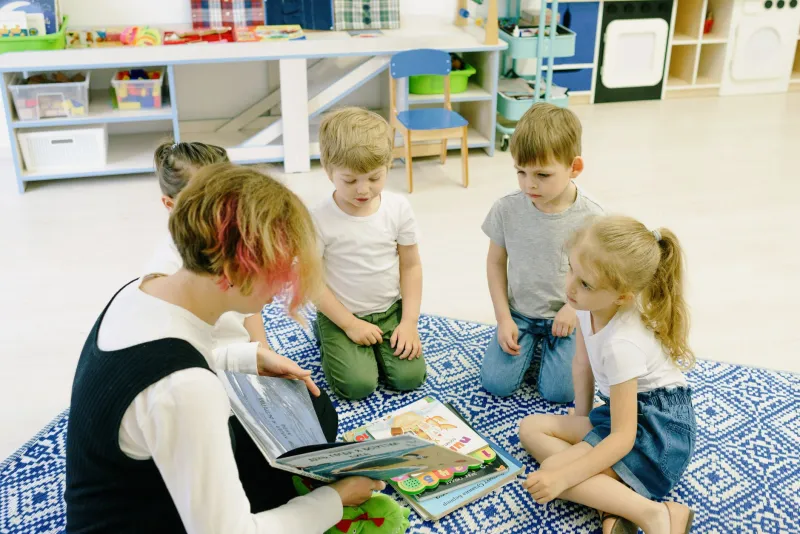
That might look like a stretch of afternoon time with open-ended materials and no assigned task. It might be outdoor time with minimal adult direction. It might simply be a quieter corner of the room where a child can sit, daydream, or stare at the ceiling for a few minutes without anyone prompting them to do something purposeful.
None of that is wasted time. All of it is developmental work in progress.
Good care providers understand that their job isn't to entertain children every moment of the day. It's to create an environment where children can learn to entertain themselves — and more importantly, to discover what they're genuinely curious about when nobody is telling them what to be curious about.
The Balance That Actually Works
None of this means structured programming doesn't matter — it absolutely does. Group activities, guided learning, physical movement, and social experiences all play a critical role in a child's growth. The goal isn't to eliminate structure. It's to stop treating every unscheduled minute like a problem to be solved.
The sweet spot looks something like this: intentional structure that builds skills and community, paired with equally intentional open space that lets children process, explore, and generate.
When those two things are in balance, something interesting happens. Kids become more engaged during structured time, not less. They come to activities with more curiosity and more ideas because they've had room to develop some of their own. They're less dependent on constant external stimulation to stay regulated. And they're better equipped to handle the moments — in school, at home, and eventually in adult life — when no one is handing them a script.
What Parents Can Do at Home
This balance doesn't have to stop when your child walks through the front door. A few small shifts at home can reinforce what good care programs are already building:
- Resist the urge to immediately fill quiet time. When your child says they're bored after school, try waiting a few minutes before responding. See what they come up with on their own.
- Keep some afternoons genuinely unscheduled. Not every weeknight needs an activity, a class, or a structured playdate. Some of the best developmental moments happen in the space between plans.
- Let them be uncomfortable briefly. The fidgety, restless feeling right before a child finds their own thing to do is normal and healthy. You don't have to rescue them from it every time.
- Notice what they gravitate toward unprompted. When kids have true free time, what they choose to do with it tells you a lot about who they are and what they care about. That information is worth paying attention to.
The Bigger Picture
We live in a world that moves fast and values productivity loudly. That pressure trickles down to our kids earlier than most of us realize. By the time a child is in elementary school, many of them have already internalized the idea that being busy equals being valuable.
Helping children build a healthy relationship with stillness — with open, unscripted time — is genuinely countercultural right now. But it might be one of the most important things we can do for their long-term wellbeing.
The empty spaces in a child's day aren't gaps in the program. They are the program. And the kids who learn to inhabit those spaces with curiosity and self-direction? They grow into people who know how to think for themselves.
That's a future worth nurturing.